
Posh vs. Eventbrite: The Event App Every Entrepreneur Should Know About!

Updated: Oct 22
The Business Behind the Experience
Every great event starts with a vision. But turning that vision into a profitable experience requires more than a good venue, a flyer, and a guest list.
Today's event curators are entrepreneurs. They're building brands, cultivating communities, generating revenue, and creating experiences that people want to be part of. Whether you're hosting a networking mixer, fashion show, brunch, art exhibition, pop-up shop, or nightlife experience, the technology behind your event can make a meaningful difference.
For years, Eventbrite has been a familiar choice for organizers looking to publish events and sell tickets. But the event technology landscape continues to evolve, offering entrepreneurs new ways to connect with their audiences.
One platform worth exploring is Posh, an event platform with ticketing, social sharing, promotional tools, and features designed to help organizers grow their events.
At Our Business Matters (OBM), we believe entrepreneurs should know about the resources available to help them operate smarter and build stronger businesses. That includes discovering platforms that align with their audience, workflow, and long-term goals.
The question isn't simply which app sells tickets. It's which platform best supports the experience you're building.
Meet Posh: A Fresh Approach to Event Promotion

Posh brings event creation, ticketing, attendee communication, and promotional tools into one experience. Its approach is particularly relevant for organizers working in nightlife, culture, fashion, food, networking, and community-based events.
Think of it as a social layer for event promotion: your event isn't just a listing. It's something attendees can discover, share, and help spread through their networks.
Here are six features worth exploring.
1. Get your event online quickly
When inspiration strikes, you don't want technology slowing you down. Posh is designed to make creating and publishing an event straightforward, helping organizers move from concept to live event page quickly.
2. Turn your audience into promoters with Kickbacks
One of Posh's standout tools is Kickbacks, which allows eligible event organizers to offer incentives to people who drive ticket sales through their personal referral links.
Imagine hosting a networking event and inviting ten well-connected attendees to help spread the word. Rather than relying entirely on your own promotional efforts, you can create an additional incentive for others to bring people into the room.
The result is a more collaborative approach to event marketing.
Explore the Posh Kickback program guide.
3. Communicate with your guests
Promotion doesn't end when someone buys a ticket. Attendees need reminders, updates, directions, and timely information.
Posh offers SMS messaging tools that organizers can use to communicate with their audiences. Used thoughtfully, these features can help keep guests informed before event day.
4. Make invitations feel like an experience
The invitation is part of the brand. Posh's invitation experience, including themed music on supported invitations, can add personality to the way an event is shared.
For a curator building an identity around a particular sound, atmosphere, or culture, these details can make promotion feel more engaging.
5. Access organizer education and support
Learning how to produce a successful event is an ongoing process. Posh provides an organizer knowledge base covering event setup, ticketing, promotion, and other operational topics.
Explore the Posh Organizer Knowledge Base.
6. Explore new ways to manage revenue
Cash flow matters when you're paying deposits, booking talent, securing a venue, and investing in production.
Posh offers standard and instant payout options, subject to eligibility and applicable fees. Organizers should review the current payout requirements and costs before building those expectations into an event budget.
Visit the Posh platform to explore its current features.

The Event App Showdown: Which Platform Fits Your Business?
There is no single event platform that is best for every organizer. The right choice depends on your audience, event format, budget, and the tools you need.
Here's a practical comparison of four platforms worth knowing.
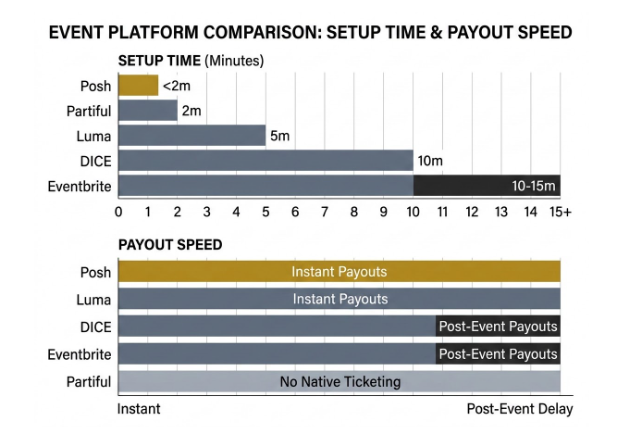
Posh — Social Promotion and Community Events
Best for: Nightlife, networking mixers, cultural gatherings, pop-ups, fashion events, and social experiences.
Posh combines ticketing and event management with tools such as Kickbacks, SMS messaging, and event promotion. It is particularly worth considering if you want to build an engaged community around recurring experiences.
Standout advantage: Built-in referral tools that can help attendees become active promoters.
Consideration: Review the current fee schedule and payout eligibility, and make sure the platform's audience and discovery features match your promotional strategy.
Explore: posh.vip
Eventbrite — Broad Event Discovery
Best for: Public workshops, conferences, classes, fundraisers, festivals, and general-interest events.
Eventbrite offers a well-established event marketplace, ticketing, promotional tools, attendee management, and reporting. Its broad discovery ecosystem can be valuable when you want potential attendees to find your event through event searches.
Standout advantage: A recognizable platform with broad event categories and marketplace discovery.
Consideration: Understand the service and payment processing fees, payout timing, and any additional marketing costs that apply to your event.
Explore: eventbrite.com
Partiful — Invitations and Social Planning
Best for: Private parties, birthdays, dinners, social gatherings, and informal community events.
Partiful focuses on shareable invitations, RSVPs, guest communication, and social interaction. It has also introduced paid ticketing features, making it relevant to some ticketed experiences.
Standout advantage: A guest-friendly invitation experience that helps hosts coordinate and communicate.
Consideration: Check its current ticketing features and fees if you're organizing a revenue-generating event.
Explore: partiful.com
Luma — Community and Professional Events
Best for: Professional networking, technology meetups, creator communities, workshops, and recurring event calendars.
Luma offers event pages, registration, ticketing, calendar tools, and attendee communication. Its free plan supports event creation and charges a platform fee for paid events, with additional options available through Luma Plus.
Standout advantage: A clean experience for community-led events and recurring professional gatherings.
Consideration: Compare the platform fee, payment processing costs, and paid-plan features against your ticket price and expected attendance.
Explore: luma.com
Quick Comparison: Find Your Fit
Platform | Primary strength | A strong fit for |
Posh | Social promotion and referral tools | Nightlife, culture, and community experiences |
Eventbrite | Broad event discovery and ticketing | Public events, workshops, and conferences |
Partiful | Invitations and guest interaction | Parties and social gatherings |
Luma | Community registration and event calendars | Networking and professional communities |
The takeaway: Choose based on what your event needs most. If you need broad marketplace exposure, Eventbrite is worth considering. If you want to activate your network through referral incentives, explore Posh. For invitation-led gatherings, consider Partiful. For professional communities and recurring meetups, explore Luma.
These platforms continue to evolve, so verify current capabilities and pricing before making your decision.
Ready to Put Posh to Work for Your Next Event?
If you're an event curator looking to streamline your next launch, experiment with referral-driven promotion, or find a fresh way to engage your audience, take a look at Posh.
You can explore the platform, review the organizer resources, and decide whether its features make sense for your next experience.
The OBM Perspective
Entrepreneurship requires more than ideas. It requires the right systems, strategic partnerships, and a willingness to keep learning. Event curators are building more than parties and gatherings. They're creating networks, supporting talent, introducing businesses to new audiences, and shaping culture. The right event technology can help make that work more organized and measurable.
So, before you publish your next flyer, take a moment to evaluate your tools. Compare your options. Understand your numbers. Build a plan to bring people into the room—and give them a reason to come back.
Our Business Matters. So does the infrastructure behind our success.
This is super helpful actually! I have wanted to move away from depending on the “tried and true” Eventbrite. The platform summaries breaks it down for me where I clearly see which of them would meet my business needs. I’m trying a couple immediately for my upcoming event. Thanks for the info!!!